Do it yourself
How to Clean and Maintain Artificial Turf
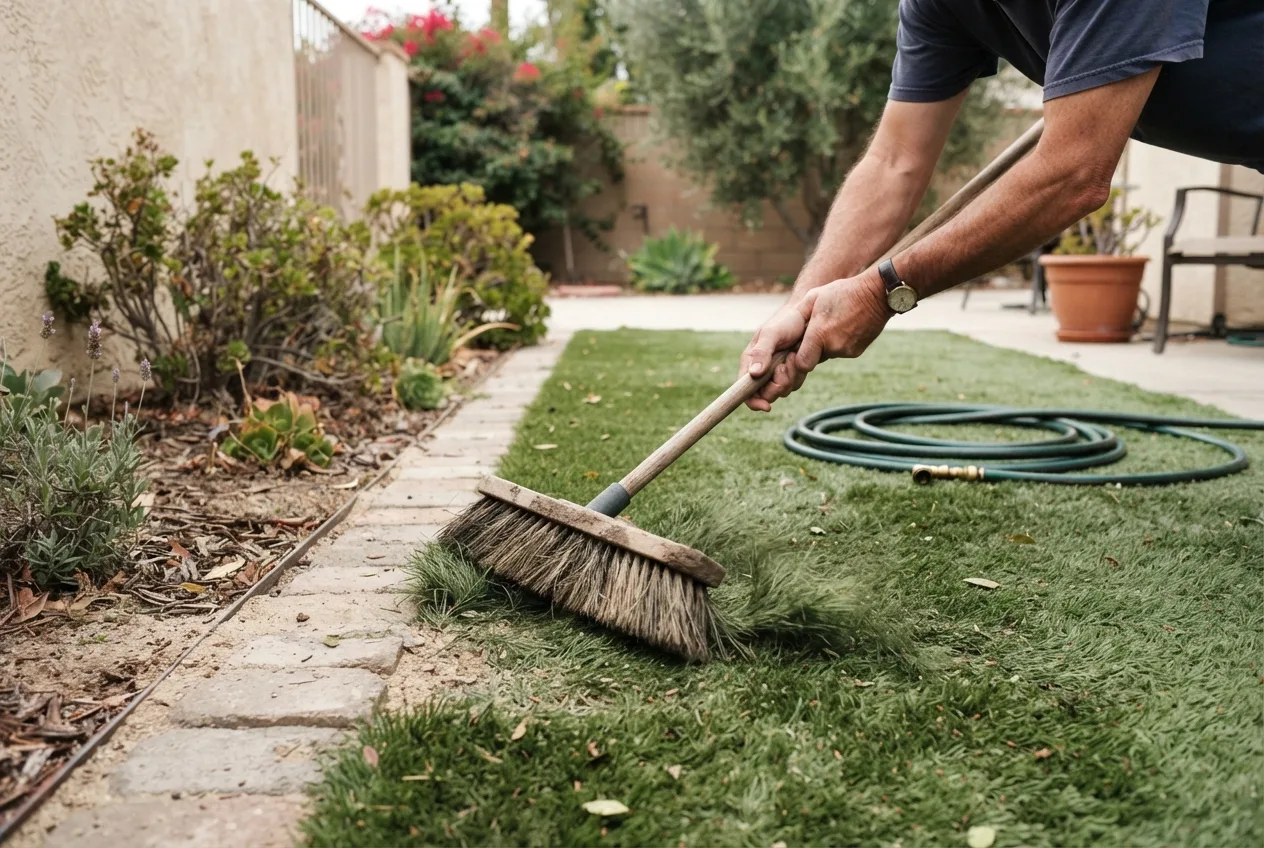
Simple artificial turf care for Southern California yards: brushing, rinsing, pet odor, heat, infill, small repairs and signs the base has moved.
Read the guide →
Build a firm gravel path in a weekend: layout, digging, fabric, edging, base rock, compaction and the mistakes that turn gravel into a mess.
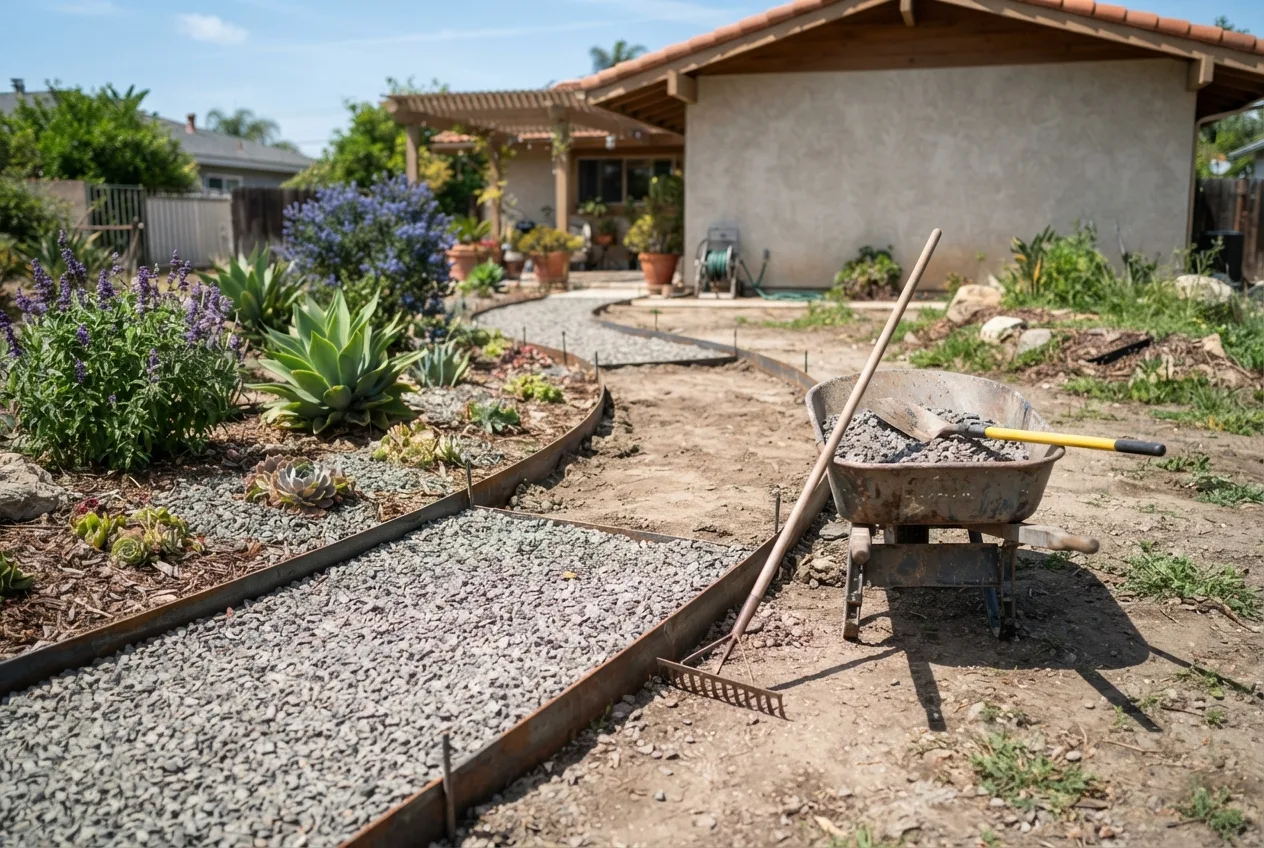
Use small angular gravel, about three-eighths of an inch, for the walking surface. Angular pieces lock together. Rounded pea gravel looks soft but rolls underfoot, which makes it a poor choice for a main path, a wheelchair or a stroller.
Decomposed granite with a stabilizer is another good option for a firmer, natural look.
Mark both edges with a garden hose or flour. Three feet is comfortable for one person and four lets two people pass. Keep a gentle curve and a slight cross slope so water drains toward planting, never toward the house.
Contact DigAlert at 811 a few days before digging. Keep the path outside the main root zone of mature trees.
Remove grass and roots, and dig about four to six inches deep. Rake it smooth, dampen it, and tamp it with a hand tamper until your heel barely marks it.
Clay soil that stays wet needs more base rock, and sometimes a drain. If water stands in your test hole a day after rain, solve the drainage before you build the path.
Install steel, stone or paver edging on both sides, with the top slightly above the finished gravel. Edging is what keeps gravel out of your beds and lawn.
Lay a woven landscape fabric over the soil and overlap the seams by about a foot. Fabric separates the rock from the soil. It does not stop weeds forever, because seeds blow in from above.
Spread two to three inches of crushed base rock, dampen it and compact it well. This step decides whether the path feels solid. Work in thin layers; a hand tamper is fine for a short path, and a plate compactor can be rented for a longer one.
Add about an inch and a half to two inches of gravel and rake it level. More is not better: deep loose gravel is tiring to walk on.
Rake it every few weeks, pull weeds while they are small, blow leaves off before they break down into soil, and top up thin spots every year or two.
On slopes gravel migrates downhill. Steps, pavers or stabilized decomposed granite are better choices there.
Call for paths on slopes, paths that must be accessible, or anywhere that needs a retaining edge or drainage. We install decorative gravel, mulch and planting along with paver and concrete walkways.
Simple artificial turf care for Southern California yards: brushing, rinsing, pet odor, heat, infill, small repairs and signs the base has moved.
Read the guide →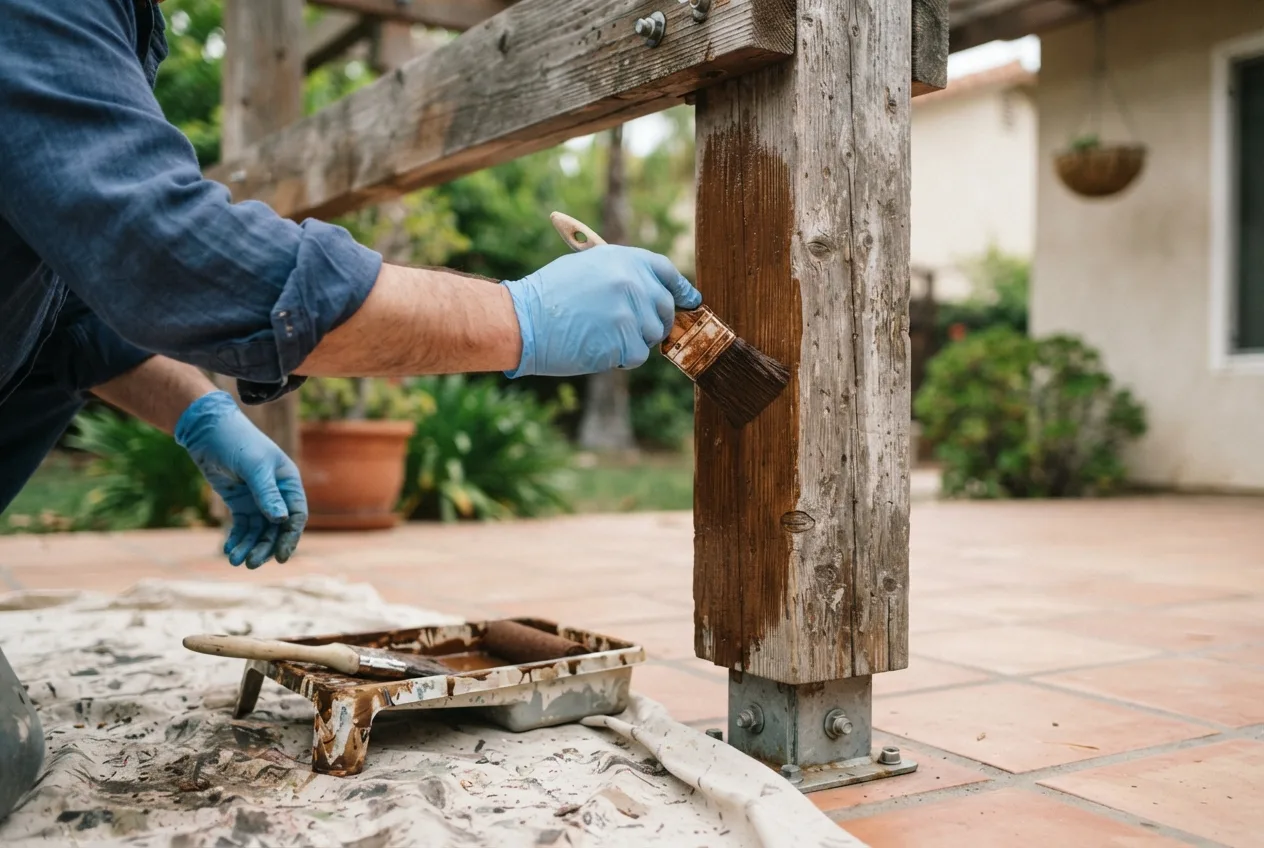
Keep a wood pergola sound: how to inspect it, clean gray wood, sand, choose stain and apply it, plus the warning signs that need a contractor.
Read the guide →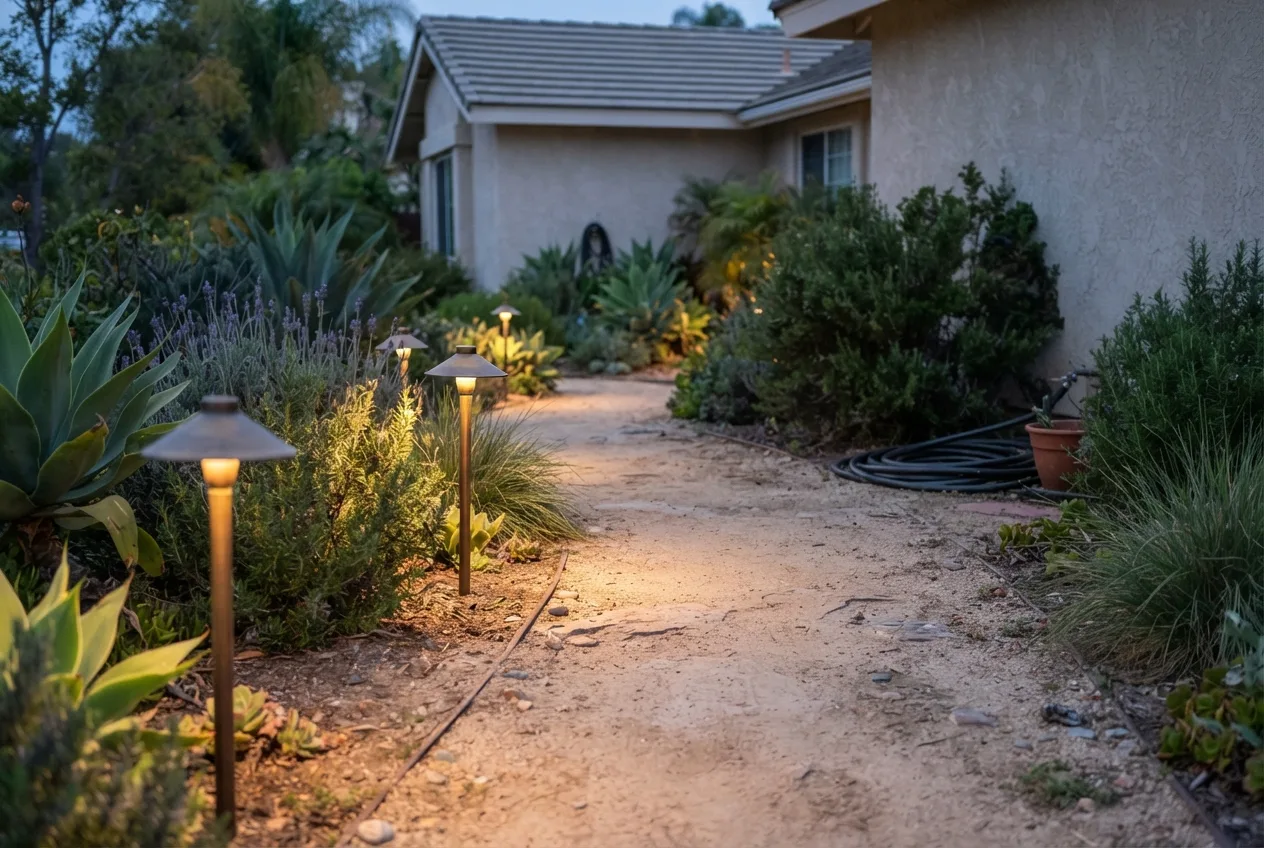
Lay out and install plug-in low-voltage path lights safely: transformer sizing, cable runs, connections, aiming and when to hire a professional.
Read the guide →