Do it yourself
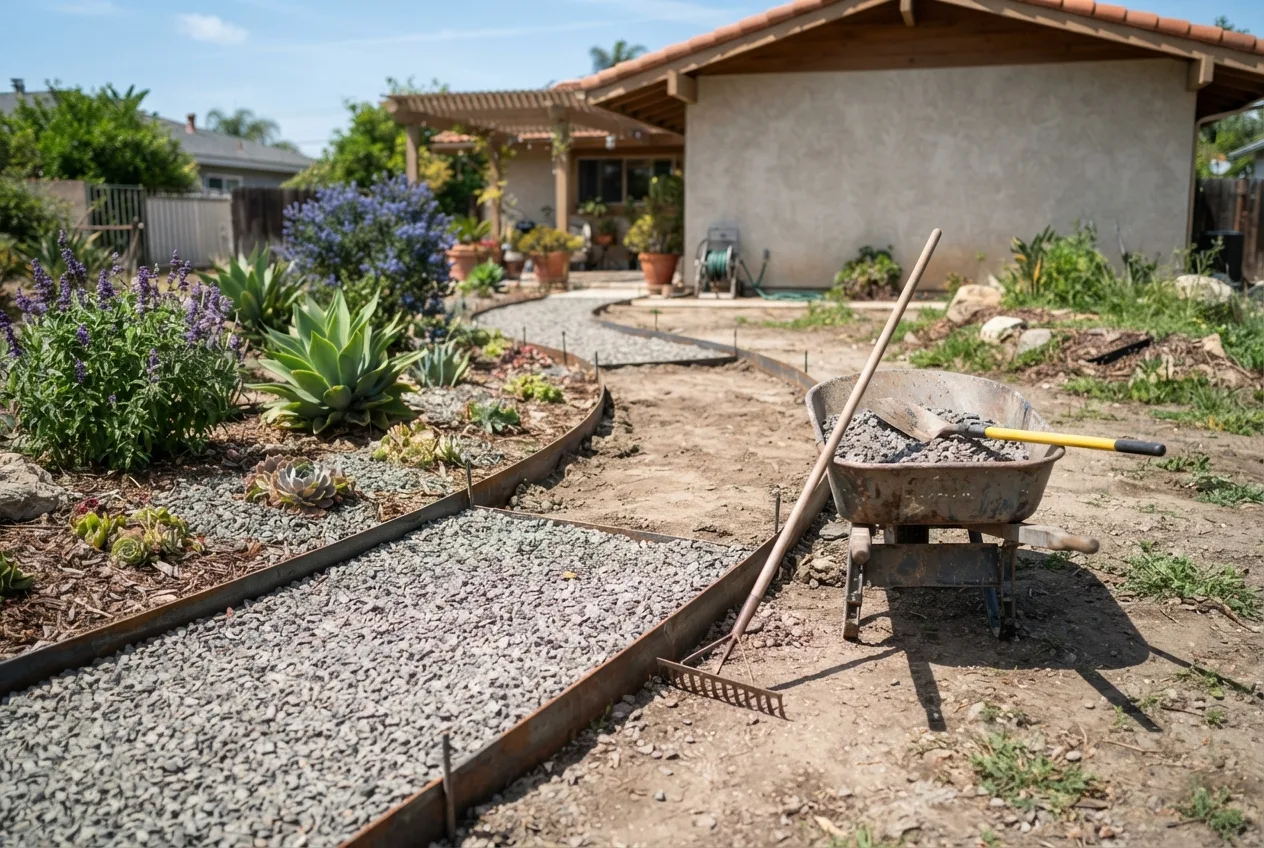
How to Build a Simple Gravel Garden Path
Build a firm gravel path in a weekend: layout, digging, fabric, edging, base rock, compaction and the mistakes that turn gravel into a mess.
Read the guide →
Simple artificial turf care for Southern California yards: brushing, rinsing, pet odor, heat, infill, small repairs and signs the base has moved.
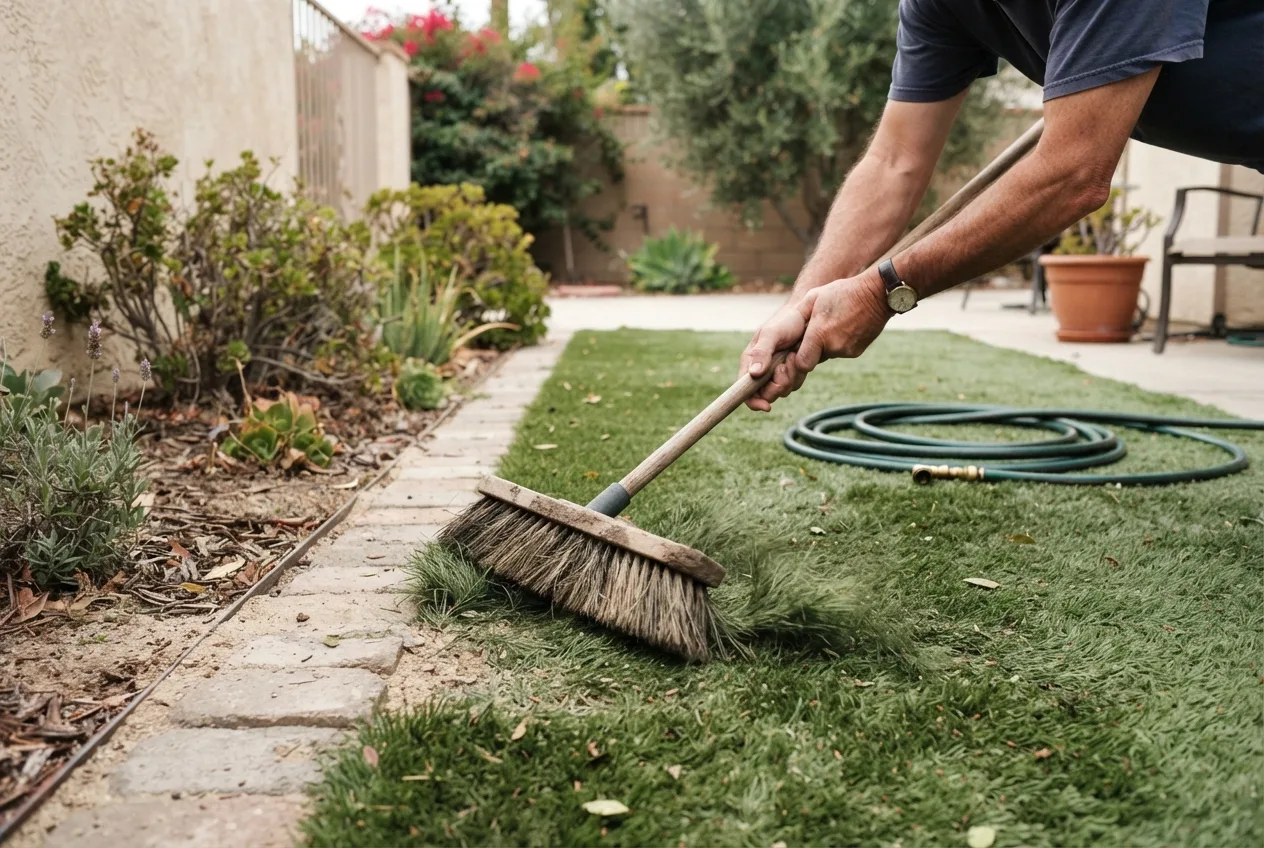
Remove leaves with a blower or a plastic rake before they break down. Rinse dust off every couple of weeks in dry weather, and more often near the beach, a road or a job site.
Brush high-traffic areas against the lean of the fibers once a month with a stiff synthetic broom. Do not use wire bristles; they damage the fibers and can pull at seams.
Pick up solids promptly, then rinse. Rinse urine spots often in hot weather, because odor comes from what dries in the infill and base. An enzyme cleaner made for artificial turf helps when water alone is not enough; follow its label.
Avoid bleach, solvents and strong detergents. They can fade or weaken the turf and harm nearby plants.
Blot first, then use a little mild dish soap in water and rinse well. Let sticky spills harden with ice in a bag and lift them off. Check the turf maker's care sheet before you try anything stronger.
Keep grills, fire pits and cigarettes off the turf. It can melt. Reflections from some energy-efficient windows can also concentrate enough heat to melt fibers, so watch for shiny, curled patches that appear at the same time each day.
Turf in full sun gets much hotter than grass. Rinse it before children or pets use it, and feel the surface with your hand first. Shade from a tree, umbrella or patio cover makes the biggest difference.
If fibers lie flat soon after brushing, the infill may be low. Add a thin layer of the type your installer used, on a dry day, and brush it down between passes.
A lifted edge can often be pressed back and fastened with the galvanized nails used for turf. Place them at the perimeter, hide the heads below the fibers and stay away from irrigation lines.
Open seams, dips that hold water, wrinkles, or odor that returns after cleaning usually point to the base or drainage under the turf. We install and replace artificial turf and sod, including the base work underneath.
Build a firm gravel path in a weekend: layout, digging, fabric, edging, base rock, compaction and the mistakes that turn gravel into a mess.
Read the guide →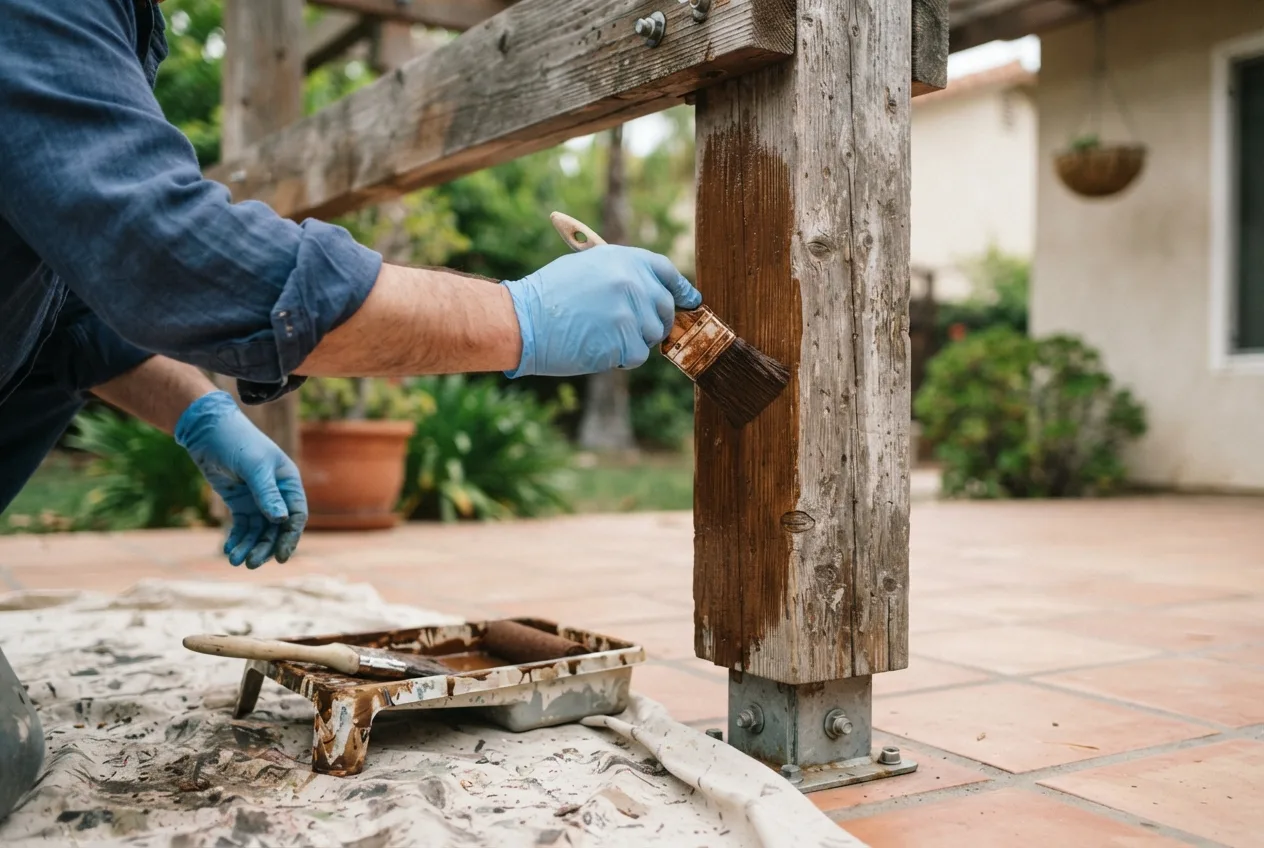
Keep a wood pergola sound: how to inspect it, clean gray wood, sand, choose stain and apply it, plus the warning signs that need a contractor.
Read the guide →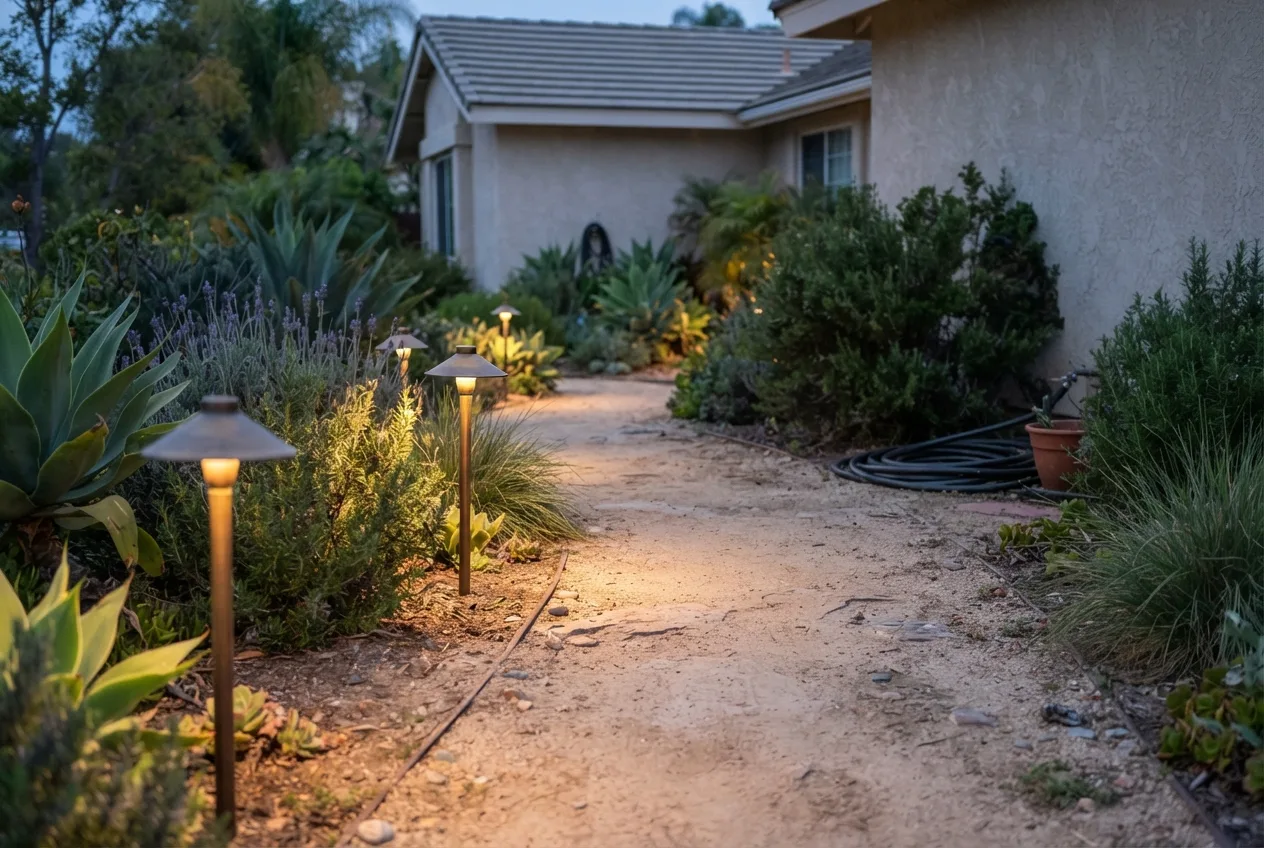
Lay out and install plug-in low-voltage path lights safely: transformer sizing, cable runs, connections, aiming and when to hire a professional.
Read the guide →