Do it yourself
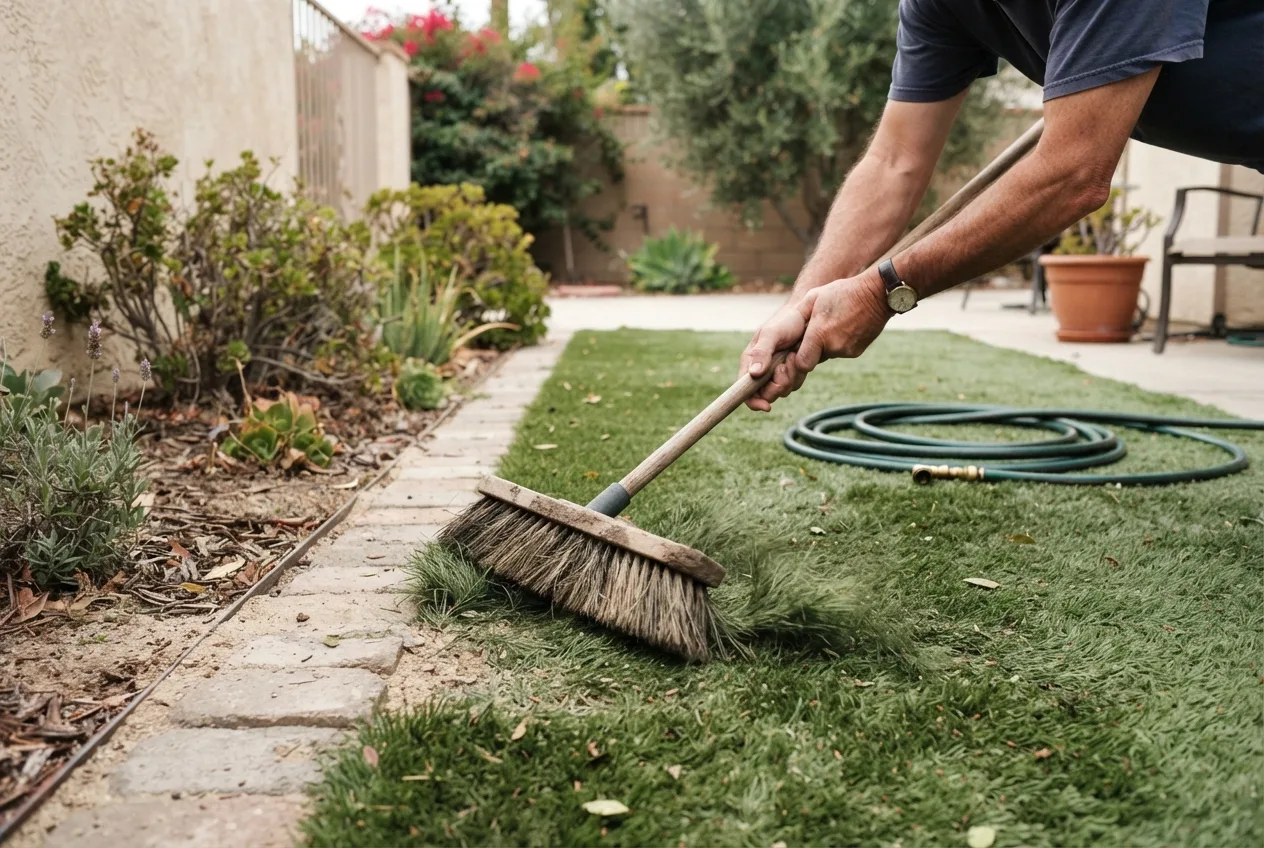
How to Clean and Maintain Artificial Turf
Simple artificial turf care for Southern California yards: brushing, rinsing, pet odor, heat, infill, small repairs and signs the base has moved.
Read the guide →
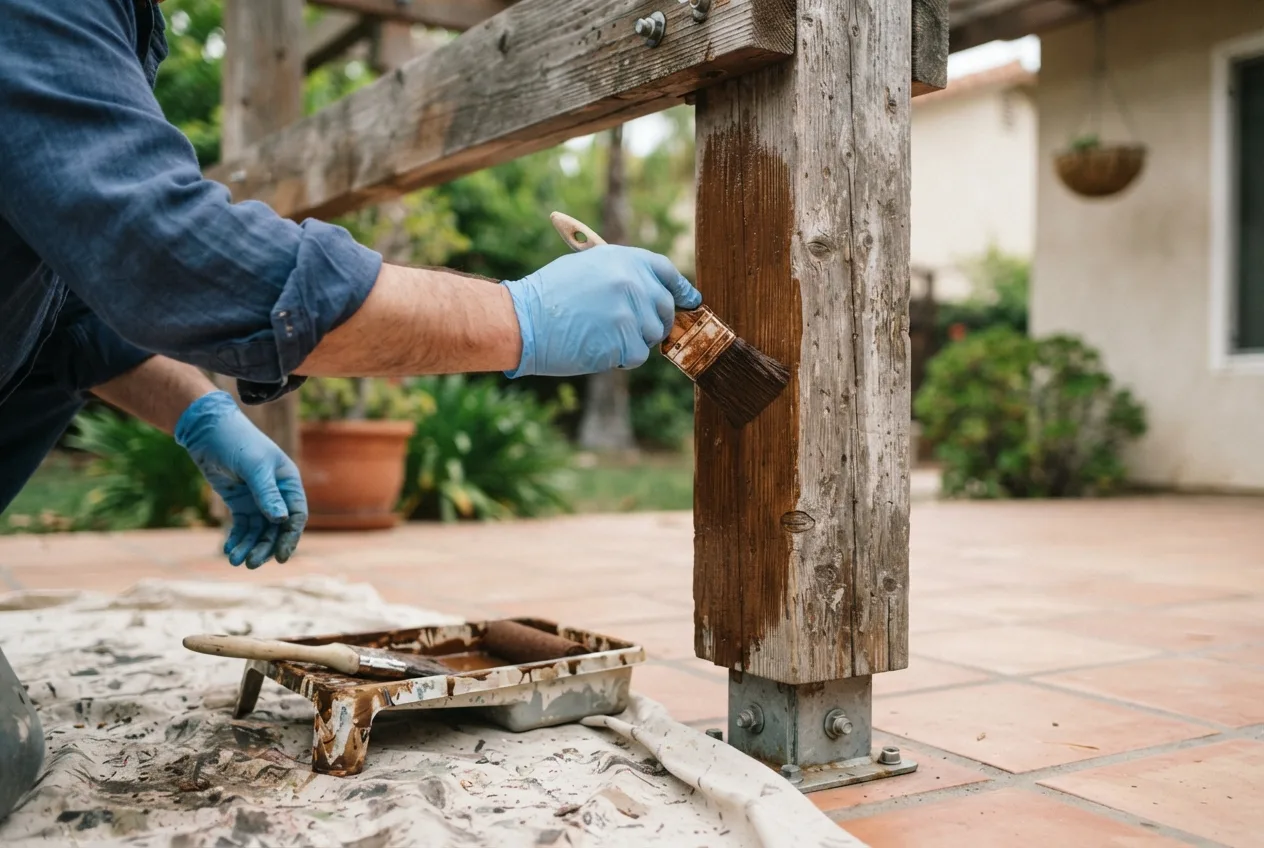
Keep a wood pergola sound: how to inspect it, clean gray wood, sand, choose stain and apply it, plus the warning signs that need a contractor.
Start at the ground. Push a screwdriver gently into the bottom of each post and around every joint. Sound wood resists; soft or crumbling wood means rot or insects. Look for rusted hardware, loose bolts, cracked beams and posts that move when you push them.
Stop here if you find soft posts, sagging beams, or a ledger board pulling away from the house. Those are structural problems, and stain will only hide them.
A stable step ladder on level ground, drop cloths, painter's tape, oxygen-based wood cleaner, a soft brush, a garden hose, sandpaper around 80 to 120 grit, a dust mask, gloves, eye protection, an exterior stain, brushes and a small roller.
Test any cleaner and stain on a hidden spot first. Read both labels and never mix cleaning products.
Wet nearby plants and cover them. Apply the cleaner as directed, scrub with the grain and rinse with a garden hose. High pressure raises the grain and can gouge softer woods.
Let the wood dry fully, usually at least two dry days and longer in the shade. A few drops of water on the surface should soak in. If they bead up, the wood is still sealed or still damp.
Sand rough areas and raised fibers lightly, always with the grain, then brush off the dust. Tighten loose bolts and replace small rusted fasteners with the same size in a corrosion-resistant finish.
If the old finish might be lead paint, which is possible on structures built before 1978, do not sand it. Have it tested first.
Work in mild weather and out of direct sun, so the stain does not dry before it soaks in. Penetrating semi-transparent stains show the grain and are easier to refresh than film-forming finishes, which can peel.
Brush from the top down, keep a wet edge, and work the stain into end grain, where water gets in. Wipe off anything that has not soaked in after the time on the label. Two thin coats beat one thick coat.
Oily rags can catch fire on their own. Lay them flat outdoors to dry, or put them in a sealed metal can with water, before you throw them away.
South- and west-facing beams fade first. Check once a year, and recoat when water stops beading or the color has gone thin. Keep soil, mulch and sprinklers away from the base of the posts.
Rot, movement, high beams you cannot reach safely, or adding a solid roof are all reasons to bring in a licensed contractor. We build and replace wood pergolas and patio covers throughout Orange County.
Simple artificial turf care for Southern California yards: brushing, rinsing, pet odor, heat, infill, small repairs and signs the base has moved.
Read the guide →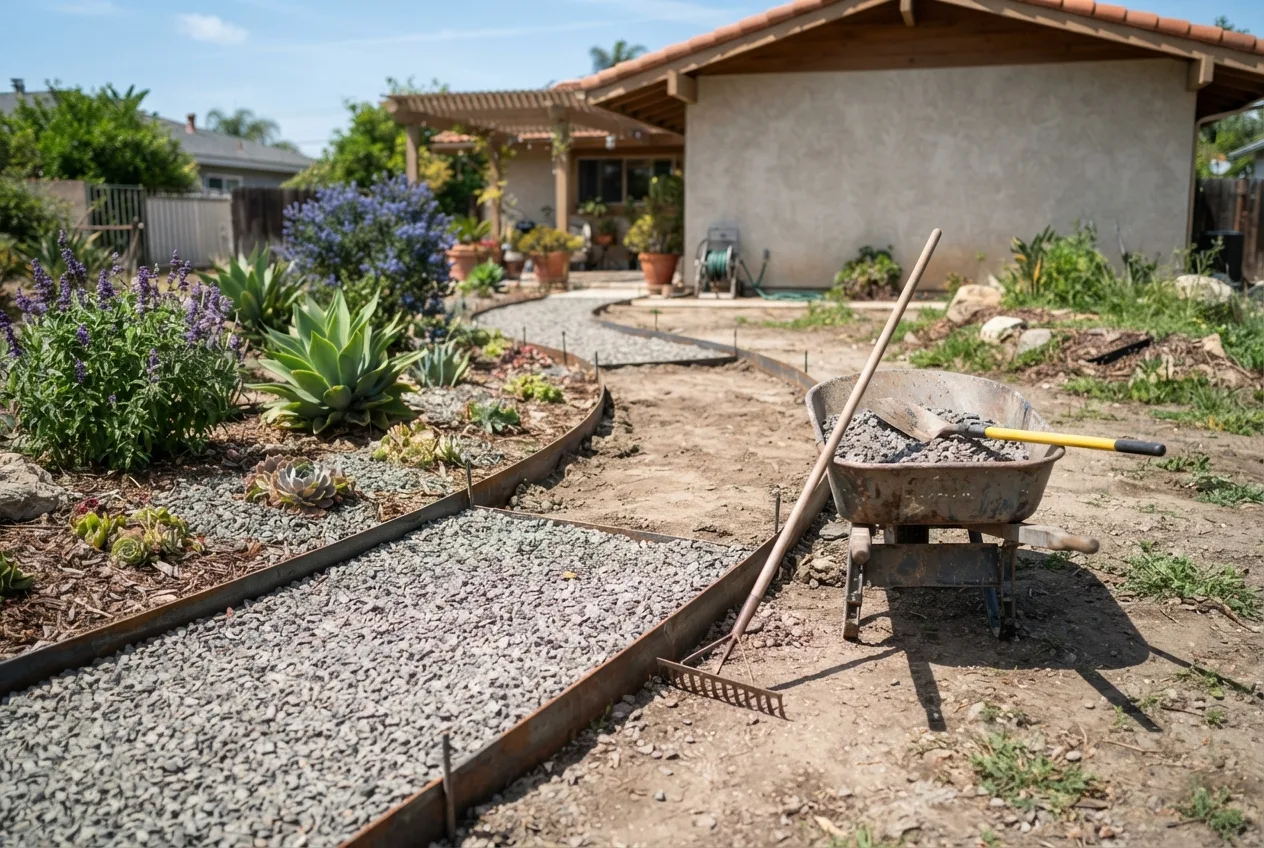
Build a firm gravel path in a weekend: layout, digging, fabric, edging, base rock, compaction and the mistakes that turn gravel into a mess.
Read the guide →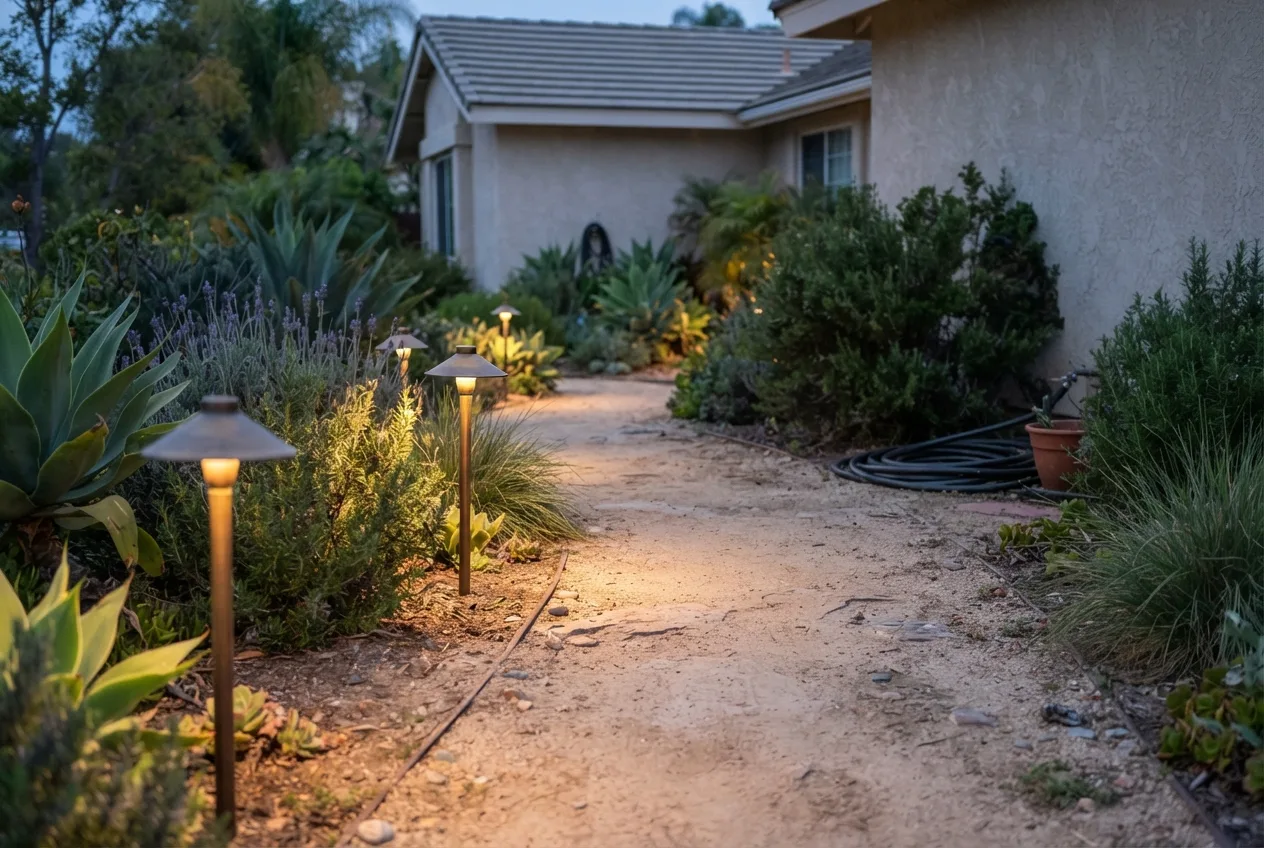
Lay out and install plug-in low-voltage path lights safely: transformer sizing, cable runs, connections, aiming and when to hire a professional.
Read the guide →