Do it yourself
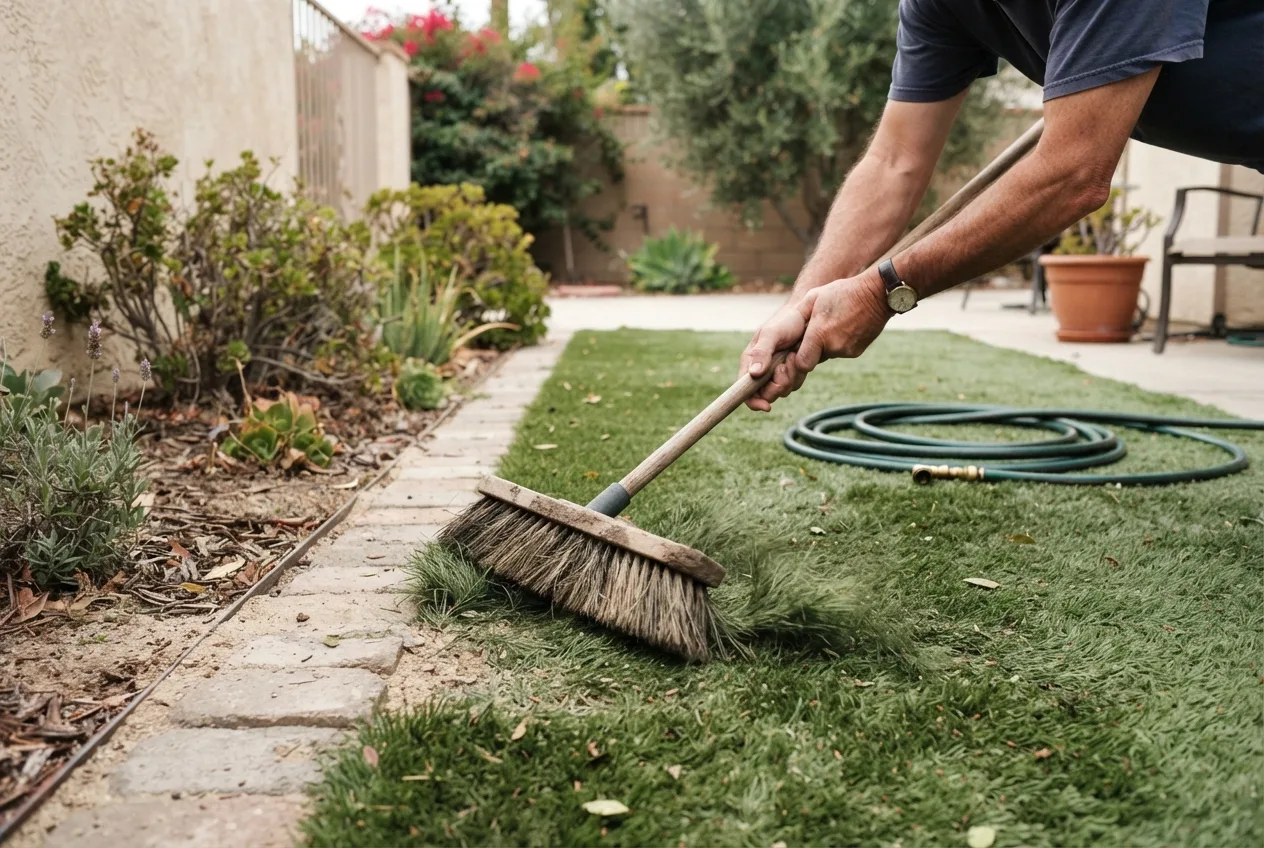
How to Clean and Maintain Artificial Turf
Simple artificial turf care for Southern California yards: brushing, rinsing, pet odor, heat, infill, small repairs and signs the base has moved.
Read the guide →
A weekend guide to cleaning pavers, clearing weeds from the joints, adding fresh joint sand and knowing when a sunken area needs a contractor.
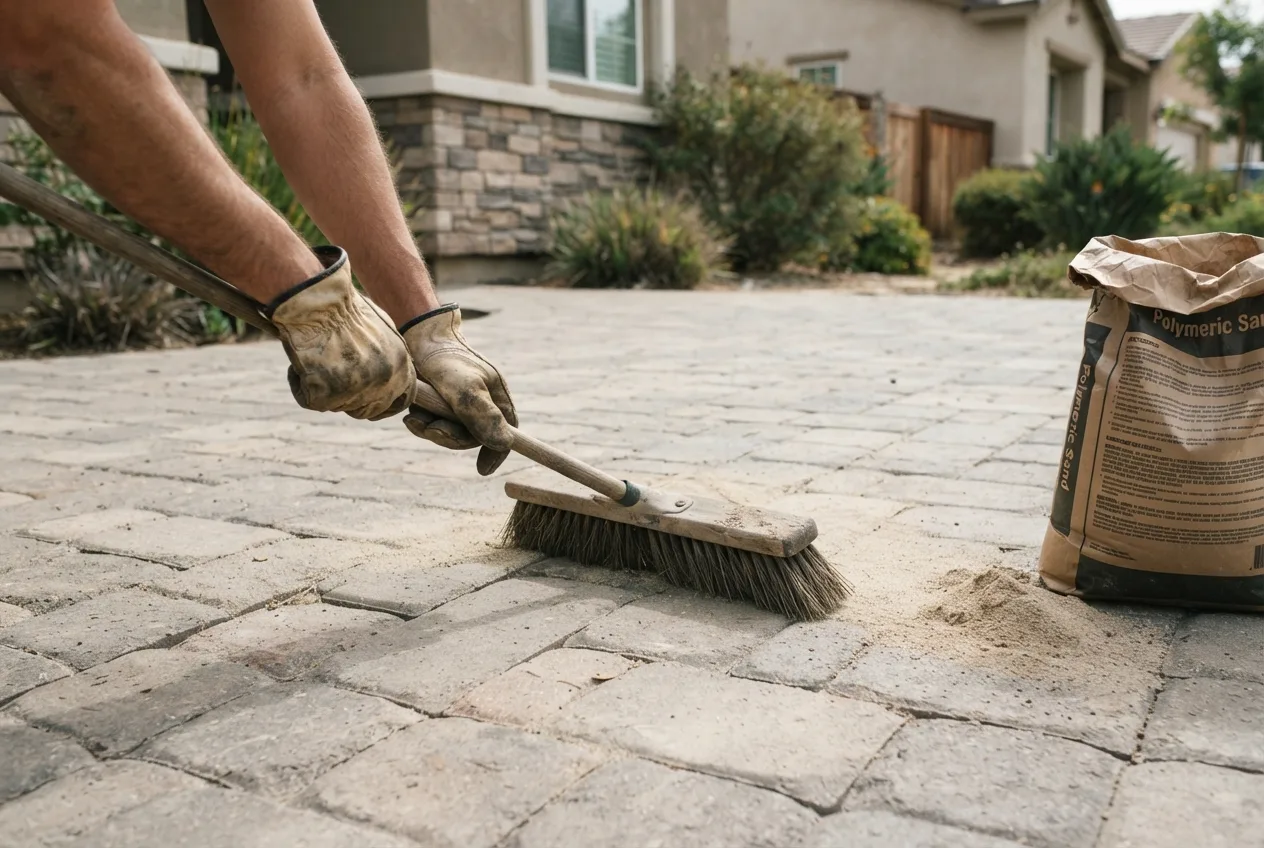
A stiff push broom, a leaf blower, a garden hose, a bucket, mild dish soap, a narrow weeding tool, safety glasses, a dust mask and enough joint sand for the area. Read the coverage chart on the bag; it depends on how wide and deep your joints are.
You can refill with regular joint sand or with polymeric sand, which hardens after it is lightly wetted. Polymeric sand resists weeds and ants better, but it must go into dry joints and it needs a dry day to set. Follow the directions on the bag you buy, because brands differ.
Pick two dry days in a row. Move the furniture, pull the larger weeds with their roots, and sweep everything off. Wash stains with a little dish soap and water, scrub, and rinse gently.
A pressure washer saves time, but it also blasts sand out of the joints and can scar the face of the pavers. If you use one, keep the pressure low, hold the wand at a shallow angle and keep it moving.
Scrape out loose sand, moss and roots until you have open space to fill. For polymeric sand, most makers ask for at least an inch of open depth, so check the bag. Use the leaf blower to clear dust from the joints and the paver faces.
Let everything dry completely. Damp joints are the most common reason polymeric sand turns hazy or fails to harden.
Pour a small pile and work it diagonally across the joints with the broom until they are full. Tamp the surface, or tap the pavers with a rubber mallet through a scrap of wood, so the sand settles. Then sweep in more. Leave the sand slightly below the edge of the paver, about an eighth of an inch.
Before adding any water, sweep and blow the paver faces clean. Dust left on top can harden into a white film.
Mist polymeric sand exactly as the bag describes: light passes, no puddles, no washing sand out of the joints. Regular sand needs no water. Keep people, pets and sprinklers away until it cures.
Sweep often, keep mulch and soil off the surface, and top up thin joints once a year. If you plan to seal the pavers, wait until the joints have cured and the surface is fully dry.
Fresh sand will not fix a base problem. If pavers rock underfoot, a section has sunk, water pools after rain, or an edge is spreading, the base or the edge restraint needs attention.
Our crew handles paver repair and new paver patios and walkways across Orange County. Send us a photo and we can tell you whether it looks like a joint problem or a base problem.
Simple artificial turf care for Southern California yards: brushing, rinsing, pet odor, heat, infill, small repairs and signs the base has moved.
Read the guide →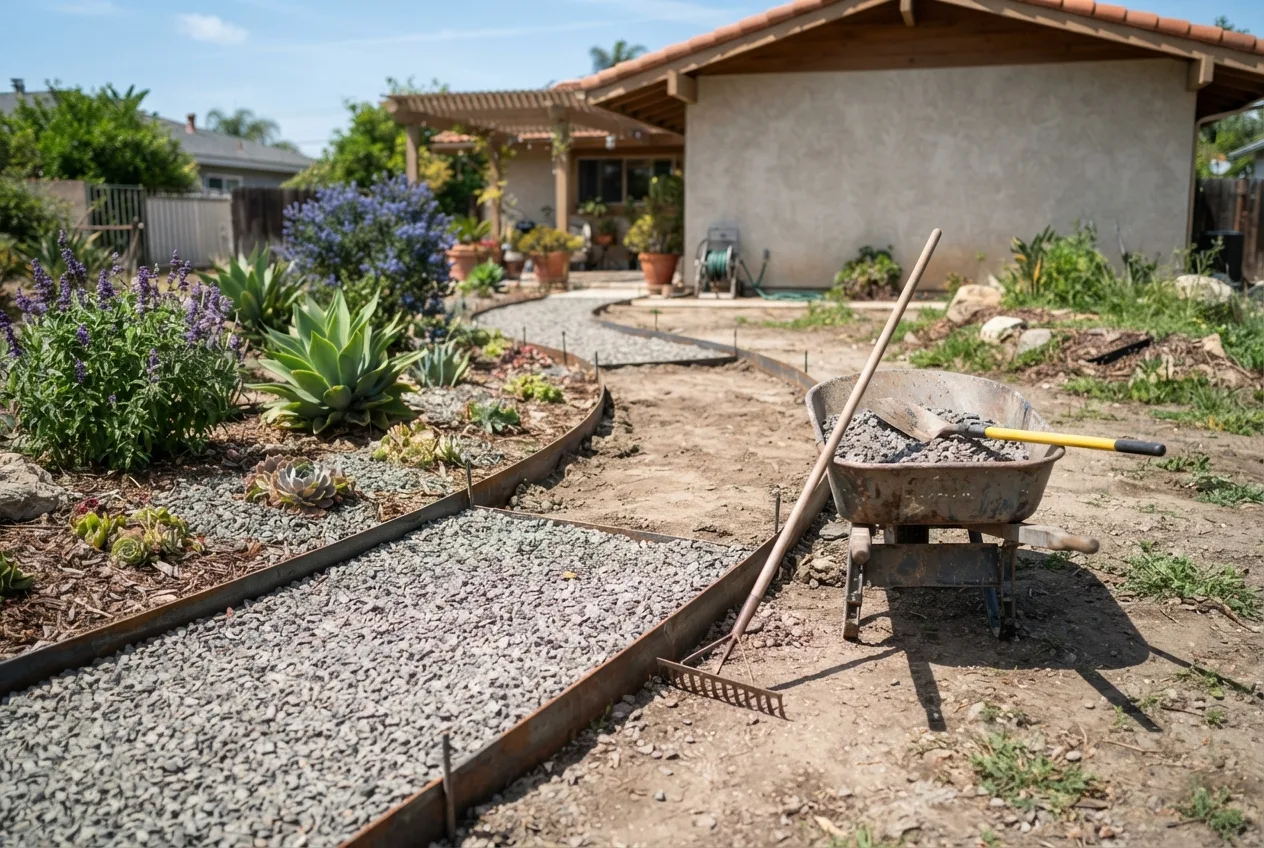
Build a firm gravel path in a weekend: layout, digging, fabric, edging, base rock, compaction and the mistakes that turn gravel into a mess.
Read the guide →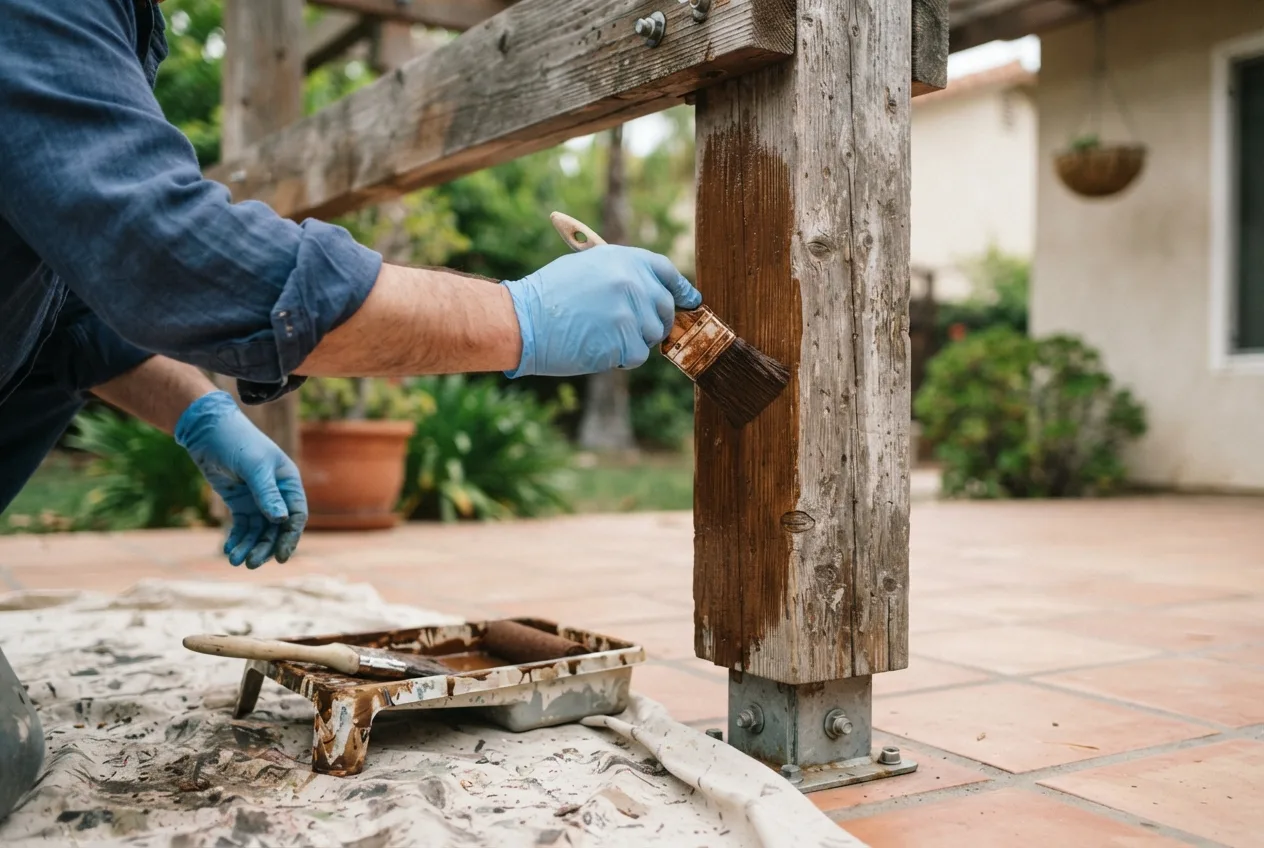
Keep a wood pergola sound: how to inspect it, clean gray wood, sand, choose stain and apply it, plus the warning signs that need a contractor.
Read the guide →